Riding in Queenstown, New Zealand, puts a bike through two very different kinds of wear. In dry spells the trails turn to fine, gritty schist dust that hangs in the air behind every rider and settles on everything that moves. When the weather turns, the same trails send mud, water and grit up into the parts of the bike that do the hardest work.
Dust and mud are not just mess. Mixed with chain lube or brake heat, grit becomes a grinding paste. It wears metal against metal, glazes pads and hides problems until they are expensive. Most of the mountain bike repair work that comes across our stand starts as wear that could have been caught earlier in a routine service.
This guide covers what dust and wet descents do to your drivetrain and brakes, the signs to look for between rides, and when it is time to book mountain bike servicing.
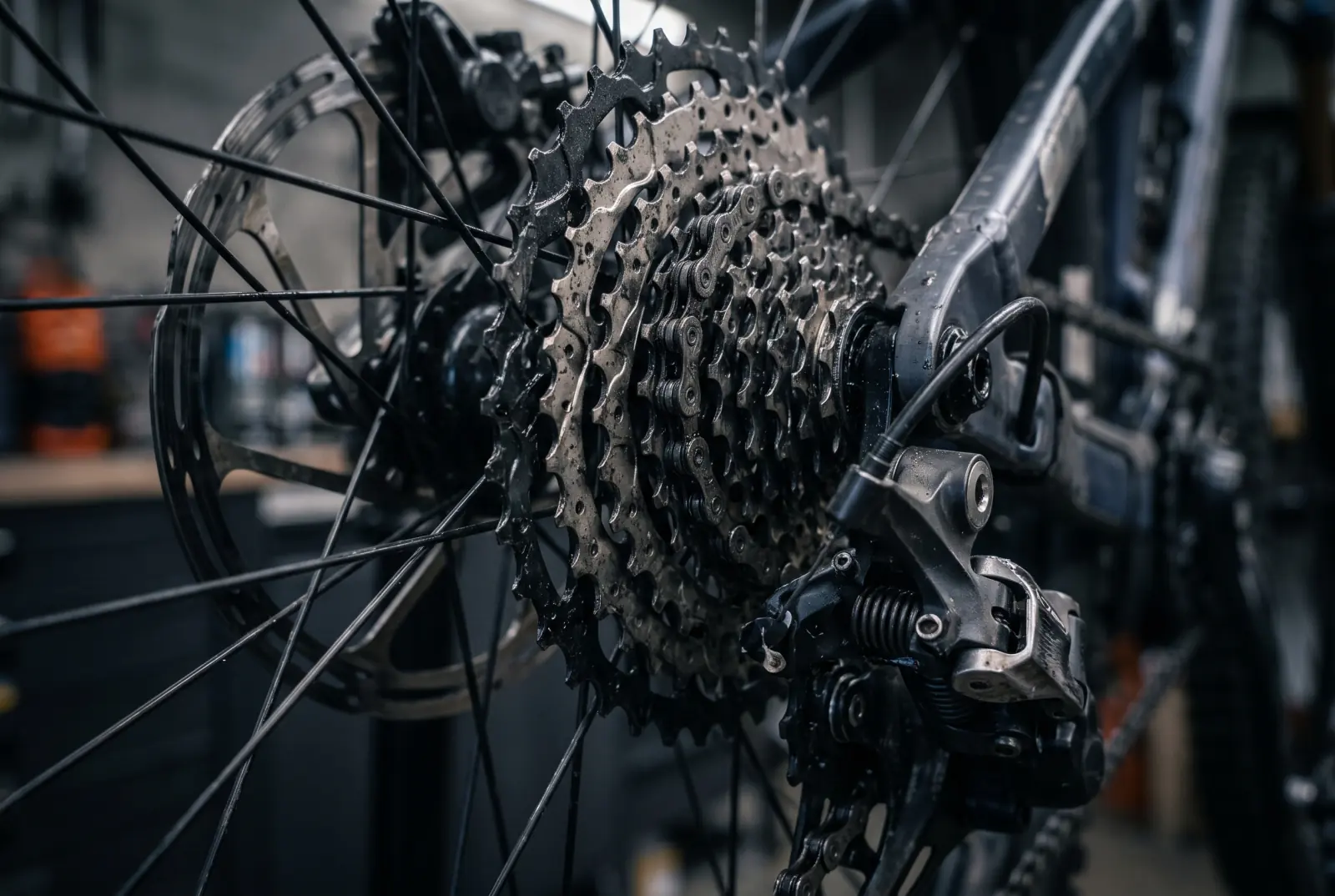 ## Chains, cassettes and jockey wheelsYour chain is the first thing to suffer. Fine dust sticks to wet or over-oiled lube and works its way into the rollers and pins. Every pedal stroke grinds it a little further in. Over time the chain stretches, which really means the pins and rollers have worn, and a stretched chain starts to wear the teeth of your cassette and chainring to match its new shape.
That is why a worn chain left too long becomes a bigger job. Replace the chain early and the cassette and chainring usually carry on. Leave it, and a new chain will often skip on the old, worn teeth, so the whole drivetrain has to be replaced together.
Jockey wheels, the small pulleys in your rear derailleur, collect a ring of packed grit after wet rides. Their bearings dry out and their teeth wear to sharp points. Rough or noisy jockey wheels make shifting vague and add drag you can feel on a long climb.
Between rides, wipe the chain clean before you lube it, use a lube that suits the conditions, and wipe off the excess so there is less for dust to stick to. ### Signs your drivetrain needs attention - The chain skips or jumps under load, especially when you stand up to climb. - Shifts are slow, noisy or miss a gear, even after a cable adjustment. - The chain stays gritty or squeaks soon after you clean and lube it. - Cassette or chainring teeth look hooked or pointed rather than square. - The jockey wheels feel rough or wobble when you spin them by hand. ## Pads, rotors and fluidLong descents ask a lot of disc brakes. On a dry day, schist dust gets between pad and rotor and acts like sandpaper. In the wet, mud and water carry grit through the caliper, and pads can wear down far faster than they do on a dry trail. A pad worn to its backing plate will score the rotor and can stop working when you need it most.
Rotors wear thinner over time and can warp from heat on a long, steep run. Contamination is the other risk: chain lube, cleaning products or fork oil on a rotor or pad will cut braking power and cause a loud howl that cleaning alone may not fix.
Hydraulic fluid also ages. Heat from hard braking and moisture over time change how it behaves, and the lever can start to feel soft or wander in its travel. A brake bleed replaces the old fluid and clears any air, so the lever feels firm and consistent again.
Keep lube and sprays well away from your rotors, and look at your pads through the caliper before a big day out. 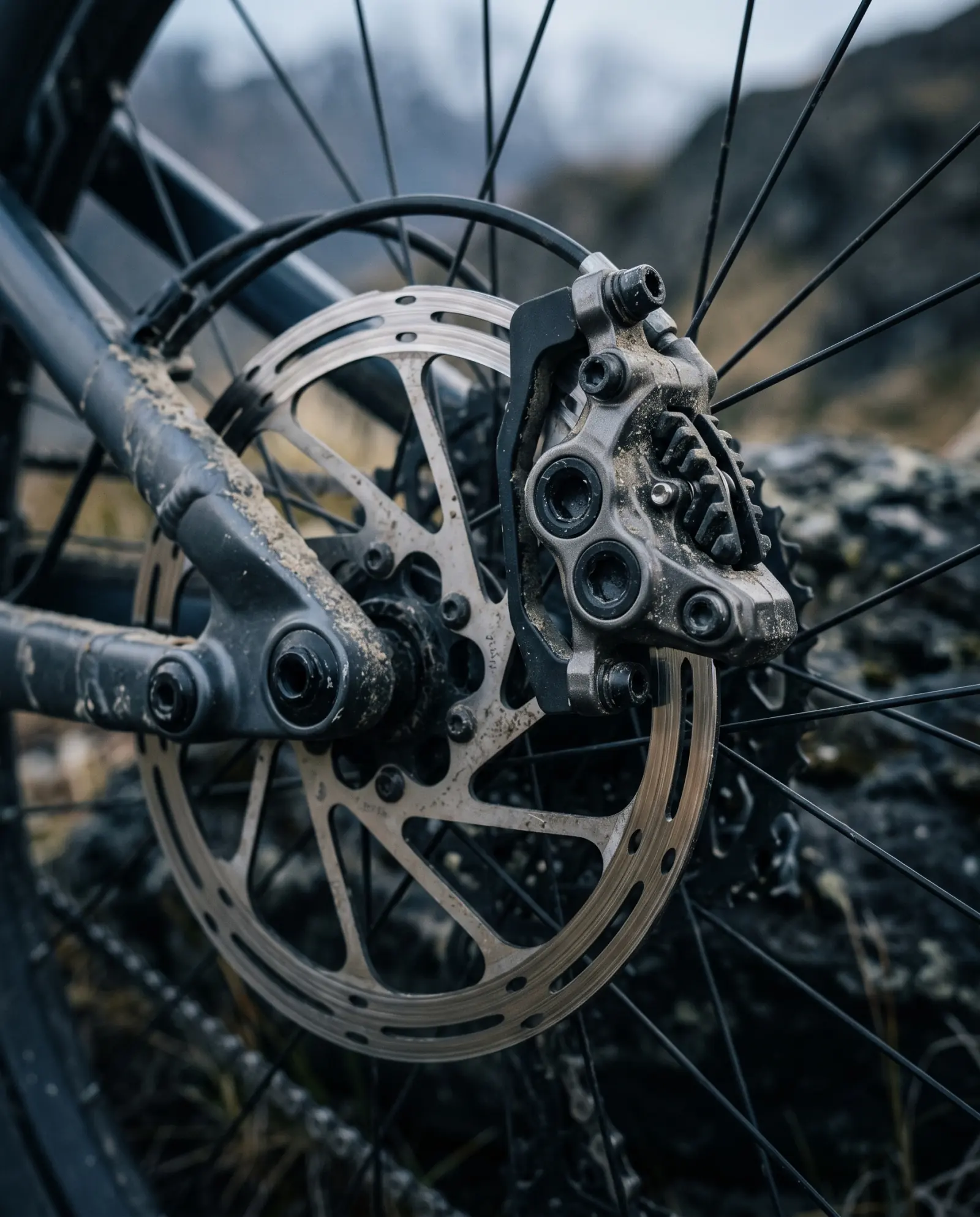 ### Signs your brakes need attention - The lever feels soft, spongy or comes closer to the bar during a descent. - Grinding or scraping when you brake, which can mean the pads are worn through. - Squealing or howling that does not go away after a clean. - Less stopping power than you are used to, especially in the wet. - A rotor that rubs, pulses or looks bent or deeply scored. ## When to book a service There is no single date that suits every rider. A bike ridden most weekends through dusty summers and wet shoulder seasons wears faster than one that comes out now and then. The best guide is the bike itself: if you notice any of the signs above, book it in before small wear becomes a bigger repair. After a run of wet rides or a dusty spell, a check is worth it even if the bike feels fine. You see the price before you book, and we tell you what we find before doing anything more. Choose a service, pick a date and tell us about your bike. ### What we check - Chain wear, cassette and chainring teeth, and jockey wheel bearings. - Gear tuning, cable and hose condition and routing. - Brake pads, rotors, lever feel and fluid condition. - Bearings and pivots that collect grit after wet rides. Book your service online. [Book a service](/book) [See our prices](/pricing) [Have a question first? Contact the workshop](/contact) --- Source: https://schist.unvop.dev/journal/schist-dust-and-wet-descents